
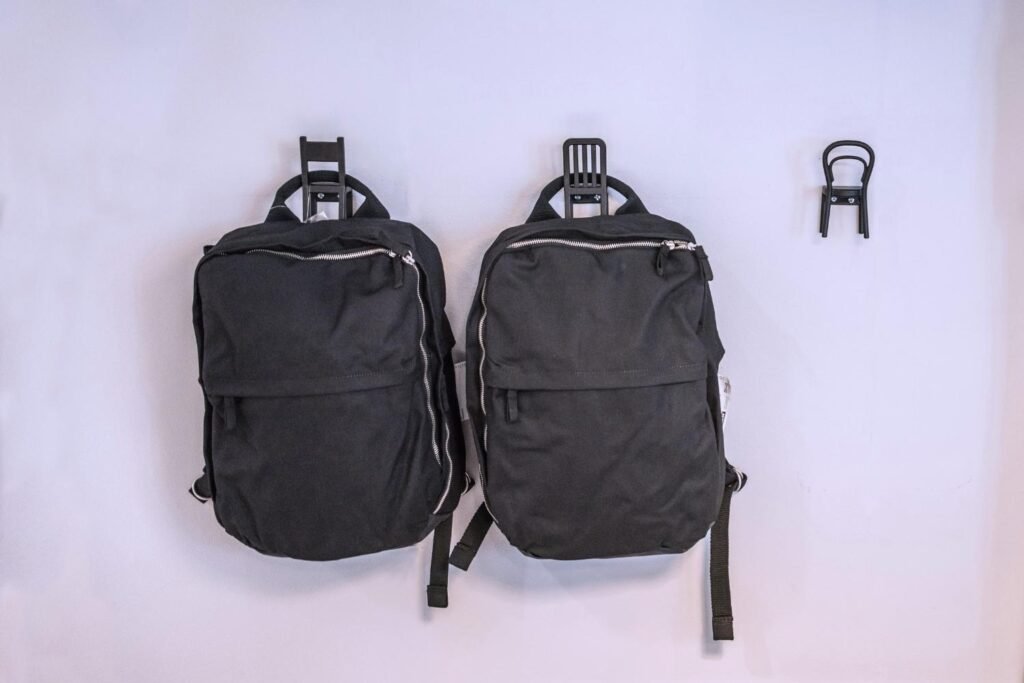
Some things are designed to perform. Fewer are designed to be remembered. Your gear should do both.
Look at the gear you carry every day. The stuff that follows you through meetings, commutes, airports, gyms, and dinners.
Notice something common across them?
It’s the safe and minimal design.
Most premium urban gear looks remarkably similar. Clean lines. Muted tones. Minimal detail. Somewhere along the way, “premium” became code for “visually invisible.”
The idea being that restraint equals sophistication. And for a while, that worked.
But here’s what happened. Everyone did it. When every brand plays the same visual note, nothing stands out.
Bold design isn’t the same as loud design
There’s a common misunderstanding worth clearing up.
When people hear “bold and expressive design,” they picture something over the top. Flashy logos. Clashing colors. Visual chaos.
That’s not what bold means. Not even close.
Bold design means the product has a point of view. It means someone made deliberate choices about shape, texture, contrast, and detail. And those choices are visible.
You can see the intention. You can feel the craftsmanship. The product doesn’t blend into the background because it wasn’t designed to.
Think about it this way. A well-tailored suit in a rich navy with a sharp lapel and precise stitching is bold. It’s not loud. It’s not over the top. But you notice it. You remember it. It communicates something about the person wearing it without saying a word.
Now apply that same idea to the gear you carry. A bag with considered proportions, textured materials, defined contours, and details that reward a second look. That’s bold.
So why don’t more brands go there?
Honestly? Because it’s harder. And riskier.
Minimal aesthetics are easier to execute. Fewer visual details mean fewer things that can go wrong in production.
A plain bag in a basic silhouette requires less design iteration, less material experimentation, and less precision on finishing.
Bold, expressive design is the opposite. Every additional visual element — a sculpted zipper pull, a textured panel, a contoured surface — adds complexity.
It demands more from the design process and more from production. One sloppy detail and the whole thing falls apart visually.
On top of that, there’s a marketing calculation. Minimal designs offend nobody. They’re safe bets. A bold design takes a stance. Some people will love it. Others won’t.
And most brands would rather sell something inoffensive to everyone than something distinctive to someone.
The result? A market full of gear that looks interchangeable. A sea of products that could all belong to the same brand, or no brand at all.
What you lose when gear plays it safe
Here’s what doesn’t get talked about enough. When your gear has no visual identity, it can’t do one of the most basic things good design is supposed to do — represent you.
Your clothes do it. Your watch does it. Your car does it. Even your phone case probably says something about your taste. But the bag on your shoulder or the organizer in your hand?
For most people, those are visual dead zones. They exist to hold things, and that’s where the design conversation ends.
That’s a missed opportunity. You put thought into how you show up — what you wear, how you carry yourself, the details you choose.
Your everyday gear is part of that picture whether you think about it or not. When it’s bland, it’s a gap in an otherwise intentional image.
The space that’s wide open
Restraint is a choice. But so is presence.
Right now, the premium gear market has plenty of options.
But when it comes to a bold, expressive aesthetic that’s actually designed for urban life, that space is surprisingly thin.
And it’s exactly the space that deserves more attention. Not loud for the sake of loud. Not busy for the sake of busy.
Design where the visual identity is treated as seriously as every other aspect of the product.
Design with a spine.